
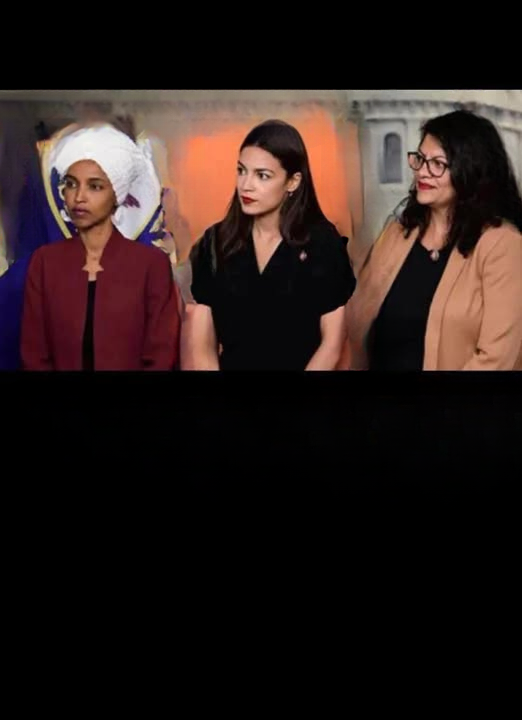
The Democratic primary in Arizona’s 7th Congressional District became a focal point for national observers watching the ideological dynamics within the modern Democratic Party. The race drew substantial attention due to its contrast between an established political name and a younger, highly online progressive challenger attempting to disrupt long-standing power structures. What unfolded, however, became a stark reminder that political influence built through social media does not always translate into electoral success.
On primary night, the Associated Press projected a decisive victory for Adelita Grijalva after about 65% of ballots had been counted. At the time of the call, Grijalva had accumulated approximately 62% of the vote. Her opponent, 25-year-old activist and social media figure Deja Foxx, took around 21%—a difference of more than 40 percentage points.
The result surprised many national activists who had hoped Foxx could mount a competitive bid. However, local political observers noted that Grijalva entered the race with substantial structural advantages, including name recognition, institutional support, and decades of family ties to the region. Foxx’s campaign, while energetic and widely shared online, ultimately fell short in persuading voters to abandon a familiar political figure for a newer face on the national progressive stage.
1. Background: The Contest Between Experience and Digital Influence
Arizona’s 7th Congressional District is a deeply Democratic region with a long history of progressive representation. For years, the seat was held by Rep. Raúl Grijalva, a prominent voice on the left of the Democratic Party. His retirement created an opening in a district where the Grijalva name carries substantial weight. His daughter, Adelita, a Pima County Supervisor with extensive local experience, entered the race as a natural successor.
Her opponent, Deja Foxx, represented a new generation of activists. At just 25 years old, Foxx gained online prominence for her advocacy work related to reproductive rights, housing insecurity, and youth empowerment. Her personal story—growing up in Section 8 housing and relying on public benefits during childhood—became a central part of her political message. Her online following, particularly among younger Americans, was noteworthy: nearly 400,000 TikTok followers and significant engagement across social platforms.
Foxx hoped to translate her digital influence into a grassroots political operation, highlighting her background, her organizing history, and her message of generational change. She received endorsements from known progressive voices, including David Hogg and “Leaders We Deserve,” a political group supporting young candidates.
Despite these endorsements, the race revealed that digital momentum alone often cannot overcome entrenched political networks in local elections.
2. Grijalva’s Dominant Position and Party Support
From the beginning, many analysts considered Grijalva the front-runner due to her extensive connections within the district. She had served on the Tucson Unified School District’s board and later on the Pima County Board of Supervisors. Her decades of work in local governance gave her credibility with long-time residents.
Additionally, she received endorsements from several national Democratic figures including:
- Sen. Bernie Sanders
- Rep. Alexandria Ocasio-Cortez
- Sen. Mark Kelly
- Sen. Ruben Gallego
These endorsements sent a clear message that much of the national progressive establishment still supported the continuation of the Grijalva family’s political legacy in the district, despite Foxx’s appeal to younger demographics.
Political scientists often emphasize that endorsements from well-known figures can help undecided voters feel confident in choosing a candidate with name recognition and experience. For many voters in Arizona’s 7th District, Grijalva represented consistency and familiarity rather than an experimental shift in representation.
3. Deja Foxx’s Campaign: Social Media Power Meets Electoral Reality
Foxx’s campaign focused heavily on storytelling, emphasizing her upbringing, her early activism, and her advocacy for reproductive healthcare access. She framed her candidacy as an effort to elevate the voices of marginalized communities and to disrupt traditional political pathways that she described as inaccessible to many young people.
While her message resonated online—with strong engagement on platforms like TikTok, Instagram, and X—it did not translate into comparable turnout among voters in her district.
3.1 Foxx’s Emphasis on “Lived Experience”
Foxx often reflected on her personal journey:
- Growing up in a low-income household
- Navigating housing insecurity
- Relying on food assistance programs
- Becoming politically active as a teenager
This narrative inspired many young fans online. However, critics argued that the district’s voters were more likely to prioritize experience in governing over personal storytelling.
3.2 Financial Support and Small Donor Energy
Foxx’s campaign raised more than $670,000, largely from small-dollar donors across the country. This level of enthusiasm mirrored national grassroots progressive campaigns seen in recent years. Still, fundraising success did not overcome the challenge of local familiarity with the Grijalva family.
3.3 Attempt at a Digital-First Strategy
Foxx aimed to modernize field campaigning by relying heavily on digital organizing, livestreams, short videos, and decentralized volunteer actions. While this approach can be effective in national politics, local primaries often depend heavily on:
- In-person outreach
- Local endorsements
- Long-standing political relationships
- Physical presence in community institutions
These components tended to favor Grijalva in the Arizona race.
4. The Aftermath: Reactions From Observers and Supporters
After the Associated Press called the race, reactions poured in from across the political spectrum.
Foxx responded by framing the campaign as a moral and strategic victory, despite the lopsided numbers. She expressed pride in the movement she built, saying she began her political journey “alone in her bedroom” and managed to create something meaningful.
Observers, however, quickly pointed to the margin of defeat. On social media, some users referenced earlier headlines by political outlets that suggested Foxx had a “real shot,” contrasting those predictions with the final vote totals.
5. Grijalva Celebrates a Family Legacy and a Community Victory
In her victory speech, Adelita Grijalva emphasized her gratitude to her father and to the voters who supported her. She described her win as a continuation of a decades-long progressive movement rooted in the local community.
She stated that the election was not merely a personal victory but a celebration of Southern Arizona’s values, including support for working families, democratic institutions, and social justice priorities that her father championed for over 50 years.
Her comments underscored the central theme of her campaign: consistency, community ties, and long-term dedication to the region’s needs.
6. The Bigger Picture: What This Election Reveals About Progressive Politics
The outcome of the Arizona race suggests several broader trends within Democratic politics:
6.1 Name Recognition Still Matters
Despite the rise of digital activism, local electoral politics still rely heavily on trust built through decades of community involvement.
6.2 Younger Candidates Face Structural Hurdles
Young progressive challengers often struggle against entrenched political networks—even when they have energetic followings online.
6.3 Endorsements Influence Voter Confidence
High-profile progressive endorsements for Grijalva likely dissuaded voters from switching to a less-established candidate.
6.4 Digital Popularity Doesn’t Always Equal Votes
Social media engagement and electoral turnout often diverge sharply in local races.
7. Shifting Progressive Strategy: New York’s Developing Political Landscape
While Arizona’s race concluded, a different political conversation has been unfolding across the country in New York City. Progressive activists and organizations are reportedly considering launching primary challenges against several Democratic members of Congress, including House Minority Leader Hakeem Jeffries, one of the most influential figures in national Democratic politics.
These discussions follow a major upset victory by Assemblyman Zohran Mamdani, a prominent democratic socialist representing Queens.
8. Zohran Mamdani’s Rise and the DSA Momentum
Zohran Mamdani, originally born in Uganda, has become one of the most visible progressive figures in New York State politics. His recent win in the New York City mayoral primary—where he defeated numerous high-profile candidates—created waves throughout the Democratic Party.
His candidacy demonstrated the appeal of progressive messaging in certain pockets of New York City, particularly among younger voters and communities interested in ambitious policy proposals.
Following his victory, the Democratic Socialists of America (DSA) issued a public statement emphasizing that the movement behind him transcended any individual race.
They encouraged supporters nationwide to join local chapters, participate in organizing efforts, and consider future campaigns aimed at reshaping the Democratic Party’s platform and representation.
9. Potential Progressive Challenges to Democratic Leadership in Congress
Reports indicate that some progressive organizations and activists have discussed initiating primary campaigns against several New York Democrats, including:
- Hakeem Jeffries
- Ritchie Torres
- Jerry Nadler
- Dan Goldman
- Yvette Clarke
While these discussions appear preliminary, they underscore a recurring tension within the Democratic Party: the push-and-pull between more traditional Democrats and those seeking to expand progressive influence.
10. Response From Jeffries’ Team
A senior political adviser to Jeffries stated publicly that any attempt to unseat the House Minority Leader would meet a decisive response. According to Fox News reporting, the adviser emphasized that such challenges would face:
“A forceful and unrelenting” defense.
This response signals that traditional Democratic leaders intend to protect their positions and maintain stability within the caucus as the party prepares for upcoming national elections.
11. How Arizona and New York Reflect Broader National Trends
Taken together, the Arizona and New York developments reflect several national political themes:
11.1 Tension Between Progressive Activism and Established Institutions
Progressive candidates often energize younger voters, but institutional support remains crucial in many primary races.
11.2 Generational Divides Within the Party
Younger candidates like Foxx often prioritize digital outreach and personal storytelling, while older candidates lean on long-term relationships and governance experience.
11.3 Regional Variation in Progressive Support
New York City continues to be a hotspot of progressive political energy, while areas like Southern Arizona tend to favor a blend of progressive values and longstanding community ties.
11.4 Organizational Power Still Influences Outcomes
Support from unions, longstanding political families, and incumbents remains a major factor in many races.
12. Conclusion: A Political Moment Defined by Transition
The events in both Arizona and New York illustrate a Democratic Party navigating an evolving political landscape. While progressive energy remains strong—especially among younger voters and activists—local elections often reveal a preference for experience, familiarity, and well-established political networks.
Deja Foxx’s defeat demonstrates the challenges of transforming digital influence into electoral victory. Adelita Grijalva’s success highlights the enduring power of community ties and recognized leadership. Meanwhile, Zohran Mamdani’s rise in New York showcases a growing appetite for progressive representation in urban centers.
Both narratives are unfolding simultaneously, reflecting a political movement in transition—one that is negotiating generational shifts, ideological debates, and the changing expectations of Democratic voters.
As the 2026 and 2028 election cycles approach, the Democratic Party will continue grappling with these internal dynamics, setting the stage for new leadership models, new strategies, and new voices across the political spectrum.
About the Author